Port Vell Barcelona: History, Things to Do & Travel Guide
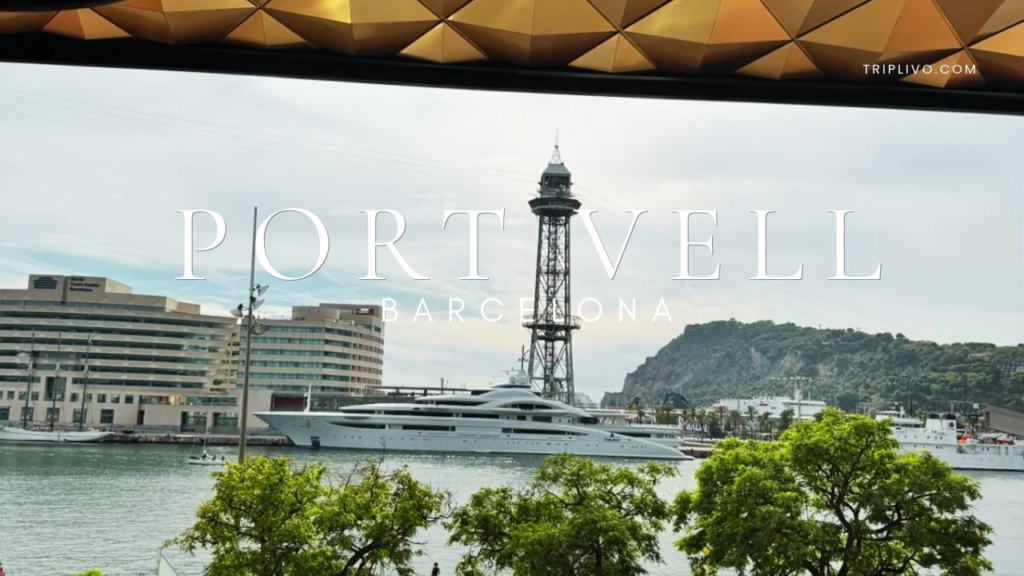
Port Vell Barcelona: Complete Travel Guide to History, Attractions and Things to Do
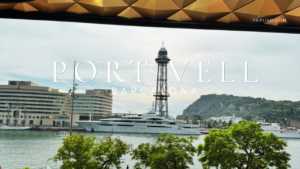
Port Vell Barcelona is one of the most beautiful waterfront destinations in the Catalan capital. Located beside the famous La Rambla and close to the historic neighbourhoods of Ciutat Vella and Barceloneta, this charming harbour combines centuries of maritime history with modern attractions, sailing boats, restaurants, museums and spectacular Mediterranean views.
Whether you are visiting Barcelona for the first time, planning a weekend city break, travelling with family or looking for beautiful places to photograph, Port Vell offers something for almost every type of traveller. You can stroll beside the marina, watch boats move through the harbour, explore historic ships, enjoy a boat trip, visit a maritime museum or relax at a waterfront restaurant.
The name Port Vell means “Old Port” in Catalan. Today, it is one of the most recognisable parts of Barcelona’s waterfront and an important meeting point between the historic city and the Mediterranean Sea.
In this complete Port Vell Barcelona travel guide, you will discover its history, the best attractions, things to do, how to get there, walking routes, photography locations, food options, accessibility information and practical tips to help you plan your visit.
1. What Is Port Vell Barcelona?
Port Vell is the historic inner harbour of Barcelona and a major part of the Port of Barcelona. It sits at the end of La Rambla, near the Columbus Monument, and extends towards Barceloneta and the city’s wider waterfront.
Unlike a conventional harbour used only for transporting goods, modern Port Vell combines maritime activities with public promenades, cultural attractions, leisure facilities, shopping and dining.
The waterfront is known for its beautiful marina, luxury yachts, pedestrian walkways, open spaces and views across the water. It is also a convenient starting point for exploring several well-known Barcelona attractions.
Visitors can enjoy the atmosphere without necessarily purchasing a ticket. Walking along the publicly accessible waterfront, watching the boats and admiring the architecture are among the simplest ways to experience the area.
Why Is Port Vell Famous?
Port Vell is popular for several reasons:
- Its long connection with Barcelona’s maritime history.
- Its position at the bottom of La Rambla.
- The distinctive wooden pedestrian bridge known as Rambla de Mar.
- The marina, sailing boats and impressive yachts.
- The nearby Barcelona Aquarium and Maremagnum shopping complex.
- Its historic ships, waterfront sculptures and museums.
- Its relaxed atmosphere for walking, photography and sightseeing.
- Its restaurants and views of the Mediterranean.
One of the area’s greatest attractions is its contrast between old and new. Historic port buildings stand alongside modern leisure facilities, while working maritime activities continue around parts of the wider harbour.
2. Where Is Port Vell Located?
Port Vell is situated in central Barcelona, Catalonia, Spain, on the Mediterranean coast.
It belongs to the wider Ciutat Vella waterfront area and is close to several important neighbourhoods and landmarks, including La Rambla, the Gothic Quarter, El Born and Barceloneta.
The Columbus Monument provides a useful landmark for visitors approaching from the city centre. From there, you can follow the waterfront towards Rambla de Mar and the Maremagnum complex.
Is Port Vell in Central Barcelona?
Yes. Port Vell is within walking distance of many central Barcelona attractions. If you are staying near La Rambla, the Gothic Quarter or El Born, you may be able to reach the harbour on foot.
Its central location makes it easy to combine with a half-day sightseeing itinerary or a longer walk along the Barcelona waterfront.
3. The History of Port Vell Barcelona
The history of Port Vell is closely connected to Barcelona’s development as a Mediterranean trading city. For centuries, maritime commerce, fishing, shipbuilding and passenger travel influenced the city’s economy and relationship with the sea.
3.1 Early Maritime History
Barcelona’s maritime connections reach back to ancient times. The wider port area developed over many centuries as the city grew in importance through trade, migration and contact with other Mediterranean communities.
However, the harbour did not always have the sheltered and efficient infrastructure that modern visitors see today. Barcelona’s coastline presented engineering challenges, and creating effective protection for ships required substantial construction over time.
The modern port therefore developed gradually rather than appearing as a single completed project.
3.2 Port Construction During the Fifteenth and Later Centuries
According to the Port of Barcelona’s historical account, the first major port construction works began towards the end of the fifteenth century. Progress was difficult, and the harbour continued to evolve through subsequent centuries.
The city’s maritime infrastructure gradually expanded to support growing commercial activity. Better docks, protective structures and harbour facilities became increasingly important as Barcelona developed into a significant industrial and trading centre.
3.3 The Nineteenth Century and the Modern Port
The nineteenth century marked a particularly important period in the port’s development.
In 1869, the establishment of the Junta de Obras del Port de Barcelona helped advance modern port construction. Engineer Josep Rafo had worked on a major project beginning in 1860, and later developments improved the organisation and protection of the harbour.
New breakwaters and modern docks, including those associated with the Muralla, Drassanes and Sant Bertran areas, helped shape the port’s structure.
The expansion of maritime infrastructure supported Barcelona’s growing commercial and industrial economy.
3.4 Port Vell at the Beginning of the Twentieth Century
Around the beginning of the twentieth century, further development transformed the port. A more ambitious programme associated with engineer Carlos de Angulo introduced improved facilities, including electric cranes, rail connections and customs services.
These improvements made the harbour more suitable for the movement of goods and supported Barcelona’s industrial growth.
However, a working port could also separate the city from its coastline. Industrial facilities and port infrastructure restricted public access to areas beside the water.
For much of the twentieth century, the waterfront was primarily understood as a place of work, transport and commerce rather than a leisure destination.
3.5 Moll de la Fusta and the Return of Public Access
An important change began in the early 1980s.
In 1981, the Port of Barcelona authorities decided to open the Bosch i Alsina quay, commonly known as Moll de la Fusta, to the public. This represented a major step towards reconnecting Barcelona with its waterfront after decades of restricted access.
An urban redevelopment project led by architect Manuel de Solà-Morales reorganised the quay and its surroundings. Work carried out between 1983 and 1985 created an open promenade with palm trees and public space beside the water.
Moll de la Fusta became an early example of how former port areas could be adapted for residents and visitors while retaining their maritime identity.
3.6 The 1989 Port Vell Redevelopment Plan
The next major milestone came with the Special Plan for Port Vell, approved in 1989.
The plan aimed to maintain the area’s port identity while introducing more public, cultural, commercial and leisure uses. The transformation was also influenced by Barcelona’s preparations to host the 1992 Olympic Games.
The redevelopment helped establish the modern character of Port Vell. Some areas were adapted for shopping, entertainment and tourism, while others continued to support maritime facilities and yacht maintenance.
Historic buildings were also given new uses, creating a more varied waterfront environment.
3.7 Port Vell After the 1992 Olympic Games
The 1992 Olympic Games formed part of a broader period of urban renewal in Barcelona. Improvements to the city’s relationship with the sea helped create a more accessible and attractive waterfront.
Port Vell benefited from this transformation, becoming a destination for walking, shopping, museums, leisure activities and marina visits.
The redevelopment did not mean that every port activity disappeared. Instead, the area developed a mixture of public spaces and maritime uses.
3.8 The Development of Nova Bocana
Further changes occurred as Barcelona’s wider port expanded. The development of Nova Bocana created additional space near the harbour entrance, including modern marina facilities and public areas.
These developments extended the city’s waterfront and created new perspectives across the sea.
3.9 Port Vell Today
Today, Port Vell represents the relationship between Barcelona’s maritime past and its modern urban life.
It remains part of a major working port while offering public promenades, cultural destinations, leisure activities and places to enjoy the waterfront.
Its history also illustrates a wider urban challenge: how to preserve maritime heritage while balancing tourism, commercial activity, public access and environmental sustainability.
For visitors, this combination makes Port Vell much more than a place to look at boats. It is a living part of Barcelona’s history and an important element of the city’s identity.
4. Best Things to Do in Port Vell Barcelona
There are plenty of activities to enjoy around Port Vell, even if you do not want to spend money on entrance tickets.
4.1 Walk Along Rambla de Mar
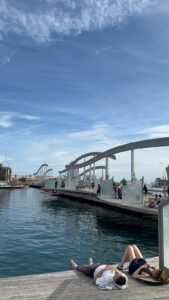
Rambla de Mar is one of Port Vell’s most recognisable features. This distinctive pedestrian walkway extends from the Portal de la Pau area towards Moll d’Espanya, connecting the city-side waterfront with the leisure area around Maremagnum.
Its design creates an attractive route across the harbour basin, with views of boats, yachts and the surrounding waterfront.
What makes it special?
- Views across the harbour and marina.
- Opportunities for waterfront photography.
- Easy access to Maremagnum and the aquarium area.
- A pleasant walk during the day or early evening.
Take your time here rather than treating the bridge simply as a route to another attraction. The water, boats and changing light are part of the experience.
4.2 Admire the Boats and Luxury Yachts
One of the easiest activities in Port Vell is watching the boats.
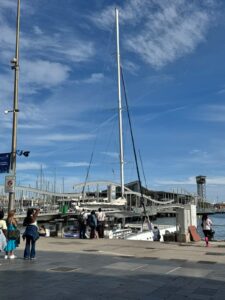
The marina contains a variety of vessels, and the wider area has become known for its impressive yachts. Depending on the day, you may see sailing boats, private vessels, harbour traffic and larger maritime operations.
The contrast between traditional boats and modern yachts is especially interesting for photography enthusiasts.
Remember that some marina facilities are privately operated. Visitors should remain in public areas and respect signs restricting access to moorings or operational facilities.
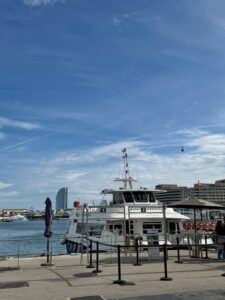
4.3 Take a Harbour Boat Trip
Boat excursions provide another way to experience Port Vell.
Traditional sightseeing boats, commonly known as Golondrinas, have operated in Barcelona’s harbour area and offer visitors a different perspective of the waterfront.
Depending on the service and route available, a trip may provide views of the marina, harbour infrastructure, coastline and city skyline.
Before purchasing a ticket, check the current route, departure point, duration, operating season and weather conditions. Different boat services may offer different experiences, and schedules can change.
A harbour excursion is a good option if you want to see Barcelona from the water without arranging a private sailing trip.
4.4 Visit L’Aquàrium de Barcelona
L’Aquàrium de Barcelona is one of the area’s best-known family attractions.
Located at Moll d’Espanya, it introduces visitors to marine life, with a strong emphasis on Mediterranean environments alongside other aquatic habitats.
The aquarium can be particularly appealing to families with children and travellers interested in marine ecosystems.
Allow extra time if you want to explore the exhibits at a relaxed pace. Admission is charged, and ticket prices and opening hours should be checked on the aquarium’s official website before visiting.
4.5 Explore Maremagnum
Maremagnum is a shopping and leisure complex beside the harbour, reached by walking across Rambla de Mar.
It offers shops, places to eat and other leisure facilities, making it a convenient stop during a waterfront walk.
The complex is useful if you want to combine sightseeing with lunch, coffee or shopping. Its position beside the water also gives visitors an opportunity to enjoy the harbour atmosphere without moving far from the main attractions.
Check individual business hours if you are planning a visit around a particular shop or restaurant.
4.6 Discover the Barcelona Maritime Museum
The Museu Marítim de Barcelona is housed in the historic Royal Shipyards, known as Drassanes Reials.
The shipyards have a long connection with Barcelona’s maritime history, and the museum explores seafaring, shipbuilding, navigation and the city’s relationship with the sea.
Its collections include maritime objects, historical material, ship models and vessels. One of the best-known highlights is the full-scale reconstruction of the royal galley La Real.
This is an excellent choice for visitors who want to understand the history behind the harbour rather than simply admire its modern appearance.
Allow sufficient time to explore the exhibitions, and verify admission arrangements before travelling.
4.7 See the Historic Schooner Santa Eulàlia
The Pailebot Santa Eulàlia is a historic sailing vessel associated with Barcelona’s maritime heritage.
Built in 1918, it is preserved as a museum vessel and forms an important part of the city’s connection with traditional sailing.
The ship is an appealing stop for people interested in maritime history, historic craftsmanship and classic sailing vessels.
Access on board may depend on its location, maintenance, events or visitor arrangements, so check the Maritime Museum’s official information before planning an interior visit.
4.8 Visit the Columbus Monument
The Columbus Monument stands near the end of La Rambla, close to the Portal de la Pau area and the entrance to Port Vell.
Inaugurated in 1888, the monument is one of Barcelona’s most recognisable landmarks.
It provides a useful starting point for a walking tour because several attractions are nearby, including the Maritime Museum, the waterfront promenade and Rambla de Mar.
The monument is also an important historical landmark in its own right. Visitors interested in its viewing platform should check current access, ticket information and opening arrangements.
4.9 Walk Along Moll de la Fusta
Moll de la Fusta, also known as the Bosch i Alsina quay, is a waterfront promenade with a particularly important place in Port Vell’s redevelopment.
The open space offers a pleasant place to walk, sit, admire the water and observe activity around the harbour.
The promenade is also associated with notable public artworks, including Roy Lichtenstein’s colourful Barcelona’s Head sculpture nearby and Javier Mariscal’s well-known La Gamba sculpture in the wider waterfront area.
Moll de la Fusta is a good option for travellers who want to enjoy the scenery without paying for an organised attraction.
Port of Barcelona — History of Port Vell
4.10 Visit the Museum of the History of Catalonia
The Museu d’Història de Catalunya is located in the Palau de Mar, a historic waterfront warehouse building.
The museum presents the history of Catalonia through exhibitions that explore its society, culture and historical development.
Its location makes it easy to combine with a walk around the harbour or a meal in the surrounding area.
If you enjoy learning about the destination you are visiting, this museum adds useful cultural context to the experience of Barcelona.
4.11 Enjoy the Waterfront Restaurants
Port Vell has a range of dining options, from casual cafés and food venues to restaurants specialising in Mediterranean dishes.
Depending on the establishment, you may find seafood, rice dishes, paella, tapas, salads and other Spanish or international food.
Dining beside the marina can be a memorable part of a visit, particularly when the weather is pleasant.
However, waterfront restaurants can be more expensive than places away from the main tourist areas. Compare menus and prices before sitting down, and check whether service charges or specific menu conditions apply.
4.12 Watch the Sunset Over the Harbour
Sunset is a lovely time to explore Port Vell.
As daylight softens, the harbour can take on warm colours, while boats and buildings create attractive silhouettes against the sky.
Choose a publicly accessible section of the promenade with a clear view across the water. Arrive before sunset if you want time to explore and find a suitable photography position.
The exact sunset time changes throughout the year, so check the forecast and local sunset time for your travel date.
5. The Most Beautiful Places to Photograph in Port Vell
Port Vell is a rewarding location for photography because it combines water, boats, historic architecture, public art and views of Barcelona’s skyline.
5.1 Rambla de Mar
Photograph the curved pedestrian bridge with boats and water in the background. Early morning can provide softer light and fewer people.
5.2 The Marina and Yachts
Use the boats as foreground subjects and capture the reflections across the harbour. Be mindful of private areas and avoid photographing people in ways that intrude on their privacy.
5.3 Columbus Monument
The monument is a strong architectural subject, particularly when photographed from the surrounding square or from a position that includes the waterfront.
5.4 Moll de la Fusta
The long promenade offers opportunities to photograph palm trees, public art and the harbour in a single composition.
5.5 Palau de Mar
The historic warehouse architecture provides a different look from the modern marina. Photographing the building from the public waterfront can help show the contrast between the port’s commercial past and its present-day uses.
5.6 Night Photography
After dark, lights around the waterfront can reflect on the water and create attractive compositions.
Use a stable camera position for longer exposures, and take care when moving around crowded pedestrian areas. Tripods may be inconvenient in busy spaces, and any commercial photography should respect applicable permissions.
Sagrada Familia Barcelona: History, Tickets, Towers & Travel Guide
6. How to Get to Port Vell Barcelona
Port Vell is easy to reach from central Barcelona using public transport or on foot.
6.1 By Metro
Two useful metro stations for the general Port Vell area are:
- Drassanes, Line L3: Convenient for La Rambla, the Columbus Monument and the Maritime Museum.
- Barceloneta, Line L4: Useful for approaching the waterfront from the Barceloneta side.
The best station depends on which part of Port Vell you want to visit. The harbour covers several quays, so there is no single station that is closest to every attraction.
Check the current Barcelona metro map and service information before travelling.
6.2 By Bus
Barcelona’s bus network serves the central waterfront and nearby neighbourhoods. The most suitable route depends on your starting point and the exact destination.
Use the official local transport journey planner to check current routes, stops and service changes.
6.3 By Walking
Walking is one of the best ways to reach Port Vell if you are already exploring central Barcelona.
From the lower end of La Rambla, you can reach the Columbus Monument and continue towards the harbour. From the Gothic Quarter or El Born, you can approach through the surrounding streets and waterfront promenades.
Walking also allows you to explore the area at your own pace and discover small details that you might miss on public transport.
6.4 By Taxi or Ride-Hailing Service
Taxis can be useful if you are carrying luggage, travelling with young children or arriving from a location farther away.
Traffic conditions and drop-off restrictions may affect the journey. Confirm the most convenient public access point with your driver.
6.5 By Bicycle
Barcelona has cycling routes and cycle facilities in various parts of the waterfront. If you plan to arrive by bicycle, follow marked routes and use designated parking facilities where available.
Pedestrian areas can be busy, particularly during weekends and peak tourist periods, so ride carefully and respect local restrictions.
7. Best Time to Visit Port Vell Barcelona
Port Vell can be visited throughout the year, but the best time depends on your priorities.
Spring: March to May
Spring is a pleasant period for walking, sightseeing and photography. Temperatures are often comfortable for spending time outdoors, although weather conditions vary.
Summer: June to August
Summer brings long daylight hours and a lively waterfront atmosphere. It is an attractive time for boat trips and outdoor dining, but it can also be hot and crowded.
Bring water, sun protection and comfortable footwear. Consider exploring early in the morning or later in the afternoon.
Autumn: September to November
Early autumn can offer warm conditions and a more relaxed atmosphere than the busiest summer weeks. Later in the season, rain and cooler weather become more likely.
Winter: December to February
Winter is suitable for walking on clearer days, visiting museums and combining the waterfront with indoor attractions.
Daylight hours are shorter, and some boat excursions may operate on reduced schedules or depend on weather.
Best Time of Day
For most visitors, the following periods work well:
- Early morning: A quieter walk and better opportunities for photographs.
- Late morning: Convenient for museums and family attractions.
- Afternoon: Suitable for combining sightseeing with shopping or dining.
- Late afternoon and sunset: Beautiful light across the marina and water.
There is no need to arrive at a particular time just to enjoy the public promenade. Ticketed attractions and boat services, however, have their own operating hours.
8. How Much Time Do You Need at Port Vell?
The amount of time you need depends on your interests.
A Quick Visit: 30–60 Minutes
Walk along the waterfront, admire the boats, cross Rambla de Mar and take photographs.
A Relaxed Visit: 2–3 Hours
Explore the main promenade, stop for refreshments, browse Maremagnum and spend time enjoying the marina.
A Half-Day Visit: 4–5 Hours
Combine the waterfront walk with a boat trip or one major attraction, such as L’Aquàrium or the Maritime Museum.
MNAC Barcelona: History, Art & Visitor Guide
A Full-Day Itinerary
Spend the morning exploring Port Vell, enjoy lunch near the harbour, visit a museum or aquarium in the afternoon, and finish with a sunset walk.
You do not need a full day if you only want to see the harbour. However, the surrounding attractions make it easy to spend several hours in the area.
9. A Suggested Walking Route Around Port Vell
This walking route is a practical way to explore the main public areas without repeatedly travelling back and forth.
Stop 1: Columbus Monument
Begin near the end of La Rambla. Take photographs and familiarise yourself with the waterfront.
Stop 2: Portal de la Pau
Continue towards the harbour entrance and observe the surrounding historic buildings and maritime activity.
Stop 3: Santa Eulàlia and the Boat Excursion Area
Look for the historic schooner and check whether a harbour excursion is available if you would like to travel on the water.
Stop 4: Rambla de Mar
Walk across the pedestrian bridge and enjoy the views of the marina.
Stop 5: Maremagnum and L’Aquàrium
Choose between shopping, eating or visiting the aquarium. Allow additional time if you purchase attraction tickets.
Stop 6: Moll de la Fusta
Return towards the wider waterfront promenade and explore its public spaces and sculptures.
Stop 7: Palau de Mar
Finish near the historic warehouse and the Museum of the History of Catalonia. This is also a convenient area to stop for a meal.
You can shorten the route by skipping indoor attractions or extend it towards Barceloneta if you have more time.
10. Food and Restaurants Around Port Vell
Food is an important part of the Barcelona experience, and Port Vell provides convenient choices beside the water.
10.1 Seafood and Mediterranean Cuisine
Seafood restaurants around the waterfront may serve grilled fish, prawns, shellfish, rice dishes and other Mediterranean specialities.
Availability and prices vary between restaurants, so check menus before choosing a place.
10.2 Paella and Rice Dishes
Paella is a familiar choice for visitors to Barcelona. You may also find other regional rice dishes and fideuà, which is prepared using short noodles rather than rice.
Look for restaurants that clearly display their menus and preparation details.
10.3 Tapas and Light Meals
Tapas are convenient if you prefer several small dishes instead of a large meal. Options may include patatas bravas, croquettes, olives, seafood and seasonal ingredients.
10.4 Coffee and Snacks
Cafés and casual food venues are useful for a short break during a long walk. Shopping and leisure areas around the harbour also offer options for travellers who need a quick meal.
10.5 Is Eating at Port Vell Expensive?
Prices vary. Restaurants with direct harbour views and prominent tourist locations may charge more than establishments in nearby neighbourhoods.
If you are travelling on a budget, compare menus, look for clearly priced set meals and consider eating a few streets away from the waterfront.
11. Is Port Vell Barcelona Free to Visit?
Yes, many of Port Vell’s public promenades and outdoor viewing areas can be enjoyed free of charge.
You can walk along accessible waterfront sections, view the marina, cross Rambla de Mar and enjoy the scenery without purchasing an attraction ticket.
However, certain activities and facilities cost money, including:
- Aquarium admission.
- Museum tickets where applicable.
- Organised boat excursions.
- Shopping and restaurant purchases.
- Some special events or organised experiences.
Always check the current prices and access conditions of individual attractions before your visit.
12. Visiting Port Vell With Children
Port Vell can be a convenient destination for families because it combines open-air walking areas with attractions suitable for different ages.
Children may enjoy watching the boats, crossing Rambla de Mar, visiting L’Aquàrium and exploring the waterfront.
Family Travel Tips
- Plan breaks instead of trying to cover every attraction.
- Bring water and sun protection during warmer months.
- Supervise children carefully near the water.
- Check whether your chosen attraction is suitable for your child’s age.
- Confirm ticket prices and family facilities before arrival.
- Avoid the busiest times if you prefer a quieter visit.
Although the main promenade can be suitable for a family walk, not every quay or marina area is designed as a playground. Keep children within publicly accessible areas and follow safety signs.
13. Accessibility at Port Vell
Port Vell contains a mixture of promenades, plazas, commercial facilities, historic buildings and ticketed attractions.
Many outdoor sections have broad paved walking areas, but conditions can differ between locations. Construction, events, crowds and temporary restrictions may affect access.
If you use a wheelchair, travel with a stroller or have limited mobility, consider the following:
- Check the accessibility information for individual museums and attractions.
- Confirm lift access where an attraction has multiple levels.
- Check public transport accessibility before travelling.
- Allow extra time when moving between different quays.
- Contact ticketed venues directly if you require specific facilities.
Do not assume every vessel, pier or historic building offers step-free access.
14. Practical Travel Tips for Port Vell Barcelona
A little preparation can make your visit more enjoyable.
Wear Comfortable Shoes
Port Vell is best explored on foot, and a longer route can involve considerable walking.
Protect Yourself From the Sun
During warm weather, carry water, wear sunscreen and take breaks in shaded areas.
Keep Your Belongings Secure
Barcelona’s busy tourist areas can attract opportunistic thieves. Keep bags closed, avoid displaying valuables unnecessarily and stay aware of your surroundings.
Check Boat and Museum Schedules
Boat services, ticketed attractions and museum access can change with the season, weather or special events. Check official information before setting out.
Respect the Working Port
Port Vell is part of a wider operational harbour. Some spaces are public, while other facilities are restricted. Follow signs and do not enter private marina or port-operational areas without permission.
Check Restaurant Prices
Review the menu and prices before ordering, particularly at restaurants with direct waterfront views.
Visit Early if You Prefer Quiet Places
Early mornings are often a good choice for a relaxed walk and photographs before the area becomes busier.
15. Nearby Places to Visit After Port Vell
Port Vell is an excellent starting point for exploring several other Barcelona attractions.
15.1 La Rambla
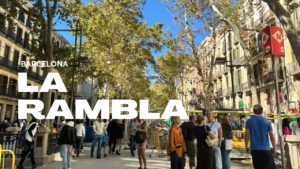
La Rambla is one of Barcelona’s best-known pedestrian avenues. It connects the city centre with the waterfront and is lined with shops, cafés, historic buildings and popular landmarks.
15.2 The Gothic Quarter
The Barri Gòtic, or Gothic Quarter, is known for its historic streets, plazas, churches and medieval architectural features.
It is a good choice for travellers interested in Barcelona’s older urban character.
15.3 El Born
El Born offers a mix of historic streets, cultural attractions, independent shops and restaurants. It is a pleasant area to explore if you want to continue away from the immediate waterfront.
15.4 Barceloneta Beach
Barceloneta is a popular seaside neighbourhood with a beach, promenade, restaurants and maritime connections.
A walk towards Barceloneta can extend your Port Vell visit into a longer coastal outing.
15.5 Montjuïc
Montjuïc is a hill overlooking Barcelona with gardens, cultural attractions, viewpoints and historic sites. Depending on your plans, you can combine it with a separate half-day visit.
The harbour cable car is one possible sightseeing experience, but check its current route, departure point and operating arrangements before making plans.
16. Is Port Vell Worth Visiting?
Yes, Port Vell is worth visiting if you want to experience Barcelona’s relationship with the sea.
It is particularly appealing for travellers who enjoy waterfront scenery, photography, maritime history, boat trips and relaxed walks. Its central location also makes it easy to combine with nearby landmarks.
The main trade-offs are crowds during busy periods and potentially higher prices at some waterfront businesses. If you prefer a quiet experience, visit early or choose less crowded sections of the promenade.
You do not need to spend money to appreciate the harbour. A simple walk can be enough to enjoy the scenery, although ticketed attractions can add depth to the experience.
This Port Vell Barcelona travel guide covers the harbour’s history, top attractions, transport options and practical tips for planning your visit.
17. Frequently Asked Questions About Port Vell Barcelona
What does Port Vell mean?
Port Vell means “Old Port” in Catalan. It refers to the historic inner harbour of Barcelona.
Where is Port Vell located?
Port Vell is in central Barcelona, beside the end of La Rambla and near the Columbus Monument, with the waterfront extending towards Barceloneta.
Is Port Vell Barcelona free?
Many outdoor public areas are free to visit. Museums, the aquarium, boat trips, restaurants and other commercial activities may require payment.
What is Port Vell famous for?
Port Vell is known for its historic harbour, marina, yachts, Rambla de Mar pedestrian bridge, waterfront walks, museums, boat excursions and nearby leisure attractions.
How long should I spend at Port Vell?
Allow around 30–60 minutes for a short walk, two to three hours for a relaxed visit, or half a day if you want to include a major attraction or boat trip.
What is the best time to visit Port Vell?
Early morning is a good choice for quieter walks and photography. Late afternoon and sunset can offer attractive light across the marina.
Can I take a boat trip from Port Vell?
Harbour sightseeing excursions operate in the Port Vell area, subject to the service, schedule and conditions. Check the current departure details before purchasing a ticket.
Is Port Vell suitable for families?
Yes. Families can enjoy the public promenades, watch boats and visit attractions such as L’Aquàrium de Barcelona. Keep children supervised near the water.
Can I visit Port Vell without a car?
Yes. The area is accessible on foot and by public transport, including nearby metro stations such as Drassanes and Barceloneta.
Are there restaurants at Port Vell?
Yes. The surrounding area offers cafés, casual dining and restaurants serving Mediterranean dishes, seafood, tapas and rice specialities.
Is Port Vell the same as the entire Port of Barcelona?
No. Port Vell is the historic inner harbour and its surrounding waterfront district. The wider Port of Barcelona also includes commercial, logistics, passenger and other maritime facilities.
Is Port Vell worth visiting at night?
It can be. The waterfront offers a different atmosphere after dark, with illuminated buildings and reflections on the water. Check individual attraction and restaurant hours because public promenades and commercial venues do not all follow the same schedule.
18. Final Thoughts: Discover the Beauty of Port Vell Barcelona
Port Vell Barcelona is one of the city’s most interesting waterfront destinations because it combines history, maritime culture, modern attractions and everyday urban life.
From its development as a working harbour to its transformation into a more accessible public waterfront, Port Vell reflects the changing relationship between Barcelona and the Mediterranean Sea.
Visitors can cross Rambla de Mar, admire the yachts, explore historic ships, visit museums, enjoy Mediterranean food or simply spend time walking beside the water. Its central location makes it an easy addition to almost any Barcelona itinerary.
Whether you have an hour or an entire afternoon, Port Vell offers an opportunity to see a different side of the city.
If you are planning a trip to Barcelona, include Port Vell in your itinerary and explore the historic harbour at your own pace. Combine it with La Rambla, the Gothic Quarter or Barceloneta to discover even more of Barcelona’s culture, architecture and coastal atmosphere.
If you are visiting Barcelona for the first time, Port Vell Barcelona is a worthwhile stop for maritime history, photography and a relaxing waterfront walk.
Travel tip: Before visiting, check the official Port of Barcelona and attraction websites for current access information, ticket prices, opening hours and boat schedules.