

Louvre Museum Paris – Complete Travel Guide, History & Visitor Tips (2026)
Louvre Museum Paris – The Ultimate Travel Guide & History
The Louvre Museum is not only the most famous museum in France but also the most visited museum in the world. Located in the heart of Paris, the Louvre represents centuries of art, culture, history, and human creativity gathered under one magnificent roof.
Every year, millions of travelers visit the Louvre to witness legendary masterpieces like the Mona Lisa, the Venus de Milo, and the Winged Victory of Samothrace.
But the Louvre is far more than famous paintings — it is a journey through civilization itself.
In this complete guide, you will learn:
-
Louvre Museum history
-
Best artworks to see
-
Ticket prices & booking tips
-
Visitor planning strategies
-
Hidden gems most tourists miss
-
Photography & travel advice
-
SEO-level travel insights for bloggers
History of the Louvre Museum
From Medieval Fortress to World Museum
The Louvre began its life in 1190 as a defensive fortress built by King Philip II of France to protect Paris from invasions.
Originally, it had thick walls, watchtowers, and a moat — nothing like today’s elegant museum.
During the 16th century, King Francis I of France transformed it into a royal palace and started collecting artworks, including pieces by Leonardo da Vinci.
This marked the beginning of the Louvre’s artistic legacy.
The French Revolution Transformation
A major turning point came during the French Revolution when royal collections were declared public property.
In 1793, the Louvre officially opened as a public museum — symbolizing art belonging to the people, not royalty.
Napoleon’s Expansion
Under Napoleon Bonaparte, the museum expanded rapidly. Artworks from across Europe entered the collection, making the Louvre one of the largest cultural institutions ever created.
Louvre Museum Architecture
The Famous Glass Pyramid
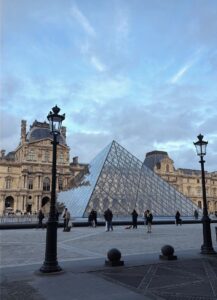
One of the Louvre’s most recognizable features is the glass pyramid designed by architect I. M. Pei.
Completed in 1989, the pyramid serves as the main entrance and blends modern architecture with classical French design.
Many Parisians initially criticized it — today it is an icon of Paris.
Museum Size and Layout
The Louvre contains:
-
Over 72,000 square meters of exhibition space
-
More than 35,000 artworks displayed
-
Collections spanning 9,000 years of history
The museum is divided into three main wings:
-
Denon Wing
-
Sully Wing
-
Richelieu Wing

Famous Artworks Inside the Louvre
Mona Lisa
The world’s most famous painting, the Mona Lisa, attracts millions annually.
Why is it famous?
-
Mysterious smile
-
Renaissance mastery
-
Theft in 1911 increased global fame
-
Artistic innovation in portrait realism
Venus de Milo
The Venus de Milo represents ideal beauty in ancient Greek sculpture.
Discovered in 1820, its missing arms remain one of art history’s greatest mysteries.
Winged Victory of Samothrace
Standing dramatically atop a staircase, the Winged Victory of Samothrace symbolizes triumph and motion.
Many art historians consider it one of the greatest sculptures ever created.
Louvre Museum Sections Explained
Egyptian Antiquities
Highlights include:
-
Ancient sarcophagi
-
Mummies
-
Hieroglyph artifacts
-
Statues of pharaohs
This section attracts history lovers fascinated by ancient Egypt.
Greek, Etruscan & Roman Antiquities
Visitors explore:
-
Mythological sculptures
-
Roman marble statues
-
Classical pottery
Islamic Art Collection
The Louvre houses one of Europe’s finest Islamic art collections featuring textiles, ceramics, and manuscripts.
European Paintings
Artists featured include:
-
Rembrandt
-
Caravaggio
-
Jacques-Louis David
How to Visit the Louvre Museum (Travel Guide)
Location
The museum sits along the Seine River in central Paris.
Nearest metro stations:
-
Palais Royal – Musée du Louvre
-
Louvre Rivoli
Ticket Prices (Approx.)
-
Adults: €17 online
-
Under 18: Free
-
EU residents under 26: Free
Best Time to Visit
Best visiting hours:
✅ Early morning (opening time)
✅ Wednesday & Friday evenings
❌ Avoid weekends and holidays
Louvre Visitor Tips (Very Important for Tourists)
1. Enter Through Alternative Entrances
Avoid the pyramid queue by using:
-
Carrousel du Louvre entrance
2. Plan Your Route
Trying to see everything in one day is impossible.
Choose 10–15 highlights only.
3. Wear Comfortable Shoes
You may walk 8–10 km inside the museum.
Hidden Gems Most Visitors Miss
-
Napoleon III Apartments
-
Medieval Louvre foundations
-
Lesser-known Renaissance galleries
-
French crown jewels
These areas are quieter but incredibly impressive.
Photography Rules
Photography is allowed without flash.
Tripods are not permitted.
Best photo spot: outside the pyramid at sunset.
Louvre Museum Facts
-
World’s most visited museum
-
Over 9 million visitors yearly
-
Originally a fortress
-
Appears in films like The Da Vinci Code
montmartre-paris-travel-guide-2026
How Long Do You Need?
Recommended time:
-
Quick visit: 2–3 hours
-
Standard visit: 4–5 hours
-
Art lovers: Full day
Nearby Attractions
After visiting the Louvre, explore:
-
Tuileries Garden
-
Seine River
-
Notre-Dame Cathedral
Why the Louvre Is Important Globally
The Louvre represents:
-
Cultural preservation
-
Artistic evolution
-
Human civilization history
It connects ancient cultures with modern audiences.
FAQ (SEO BOOST SECTION)
Is the Louvre worth visiting?
Yes — it is one of the most important museums in human history.
Can you see the Louvre in one day?
No, but you can see highlights in 4–5 hours.
Where is Mona Lisa located?
Denon Wing, Room 711.
Final Thoughts
The Louvre Museum is more than a museum — it is a cultural universe.
Whether you love art, history, photography, or travel storytelling, visiting the Louvre becomes a once-in-a-lifetime experience.
Standing before masterpieces created centuries ago reminds us that art transcends time, language, and borders.
Pingback: The Best Eiffel Tower Travel Guide 2026: Ultimate Tips